
Jaw joint disorders, known as “Temporomandibular joint disorders (TMDs)” usually present with symptoms and signs such as face muscles pain, lower jaw movement pain, jaw deviation upon mouth opening and/or joint sounds such clicking or popping sounds. Botox which is a biologic toxin which inhibits skeletal muscle contractions is used for the treatment of the uncontrolled hyperactivity of certain facial masticatory muscles and TMD symptoms.
 Your jaw joint acts as a hinge for your mouth, letting you eat and talk freely. When you have TMJ disorder, you may experience:
• Sore cheeks and jaw
• Teeth clenching or grinding
• Neck and shoulder pain
• Tension headaches
• And much more
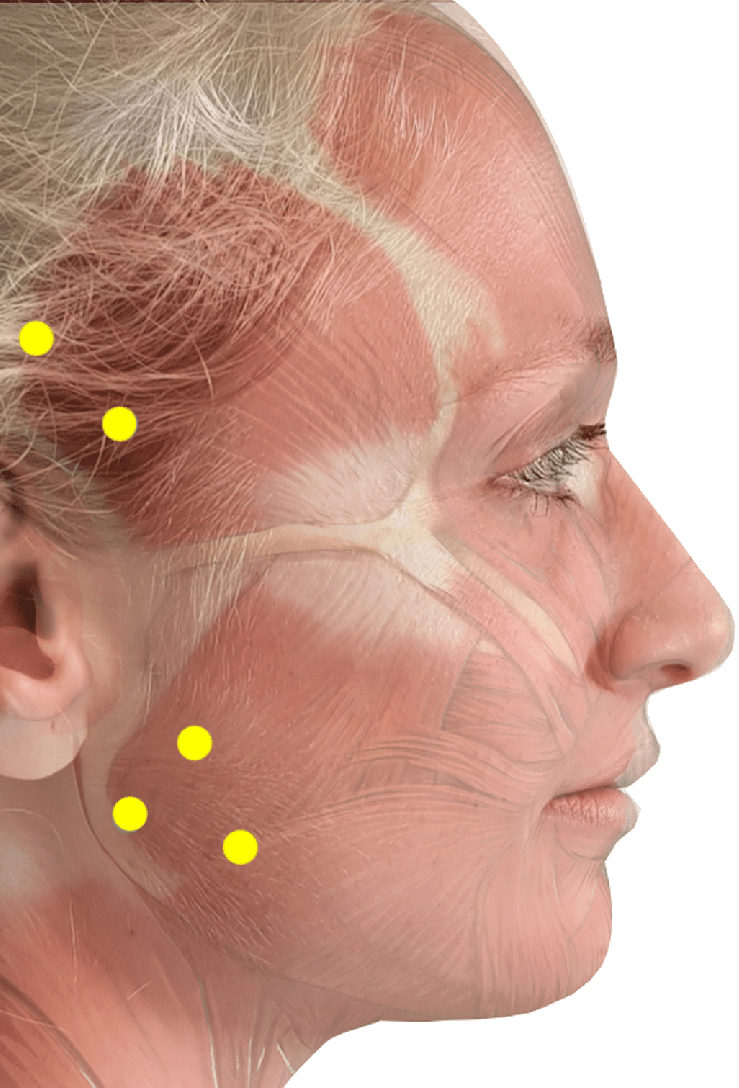 Botox once used for TMJ disorders, is injected into the different muscles depending on your symptoms. The injections will cause the jaw muscles to have a limited function which brings pain relief and decrease TMJ symptoms. Typically when we do TMJ botox we’ll do some injections at the lower jaw bones at the masseter region, and as well as for upper corners of the head at the temporalis (or the temple), which for most patients are the biggest triggers of pain. We may also inject other areas depending on your symptoms. Botox inactivates the nerve endings that cause muscles to contract, eliminating involuntary contractions in the jaw. The constant workout of facial muscles in daily activity and sleep slowly remove the botox, and that’s why repetition of an injection may be needed in about 4-6 months later.
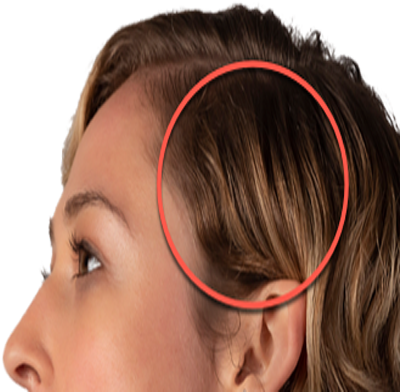 Botox works by weakening the large muscles that moves the jaw, mainly the muscle known as the masseter muscle. Botox relaxes the muscle significantly, which reduces or eliminates involuntary grinding and clenching, dental tooth structure damage and other mouth and out of the mouth pains. Botox injections can be further used at the temporal muscle which is a very large fan shaped muscle found within the area of the red circle in the image on the right. It is one of the four closing muscles of the jaw. Botox injections in the temporal area reduces or even eliminates the morning headaches and all in all improve sleeping quality, associated related neck and shoulder pain and overall one’s well-being.
Although some improvement can be felt within a day or two of treatment, it usually takes several days to feel relief. People who get Botox treatment for TMJ can expect to return to their regular activities as soon as they leave their our office
Botox for TMJ disorder may change the face shape – in a positive way, of course! When the jaw muscles are tensed and overworked as a consequence of teeth grinding for prolonged hours during sleeping, it may cause your face to look wider. Besides the above mentioned benefits of Botox use, it slims your face and restores youthfulness. Many would consider this a cosmetic bonus on top of therapeutic relief.