
• Temporomandibular Joint (TMJ) Arthrocentesis Procedure

An oral and maxillofacial surgeon will often recommend TMJ arthrocentesis when conservative therapies for TMJ pain relief have not proven to be successful. This procedure is used to provide relief from temporomandibular joint pain and discomfort. The purpose of this procedure is to remove tissue breakdown products and reduce inflammation that may have accumulated in the affected joint by flushing it. Although pain relief is never guaranteed, many patients have found this procedure to be effective in managing their symptoms.
After receiving an anesthetic, the surgeon inserts a sterile needle into the temporomandibular joint space. A syringe is attached to the needle and used to push sterile fluid into the joint space. A second needle is then inserted so that the joint can be washed out. Fluid enters the joint through one needle and leaves out the other. This removes the inflamed fluid from the joint. Some surgeons will also use a steroid (anti-inflammatory medication) at the end of the procedure. It is injected and left in the joint prior to needle removals. Sometimes hyaluronic acid (HA) is injected into the place to facilitate the disc movement at the joint area and alleviate pain and discomfort.
• Open Joint Surgery: There are many types of open joint surgeries. Such surgeries may be needed in cases where the TMJ is degenerating, there are tumors in or around the TMJ, the joint is severely scarred or contains chips of bone and once the joint is fused together by bony growth (ankylosis) after the jaw has been subject to a trauma. The surgeon makes a cut in a skin crease just in front of the ear. This exposes the jaw joint. The surgeon may repair, reposition, or replace the disc with your own tissue or an artificial disc. Scar tissue or bony growths in the jaw joint can also be removed.
How Can You Personally Manage Your TMJ Pain
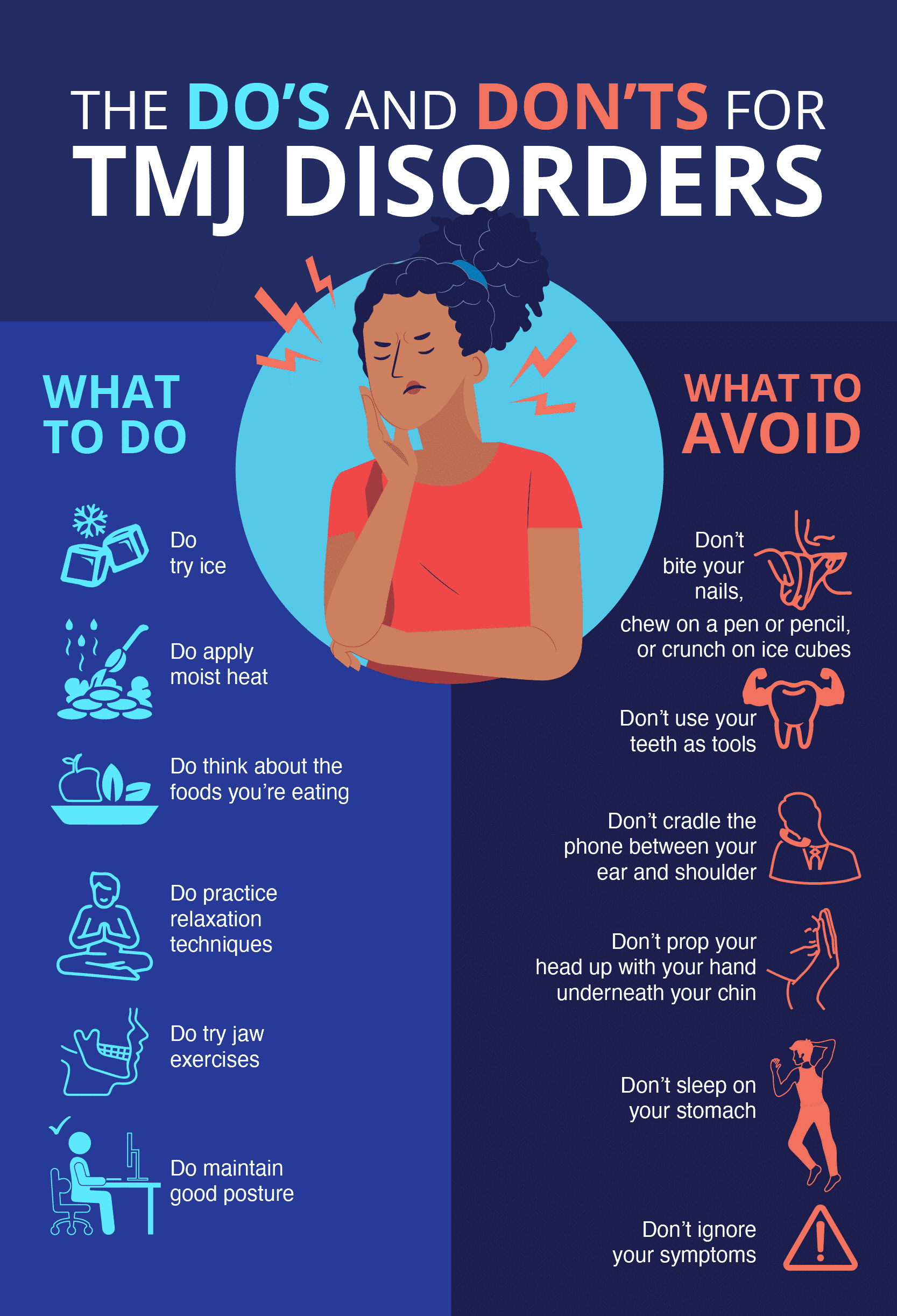 Simple self-care practices can often be effective in easing symptoms. Visiting a specialized dentist is however important to professionally mange your case based on identifying the cause of the problem and formulating a treatment plan customized to your special needs. Some of the self-care practices include;
• Apply moist heat or cold and massage tender muscle and joints: Heat or ice applications used up to four times per day while resting may relax muscles responsible for causing pain. For heat, microwave a wet towel for approximately 1 minute or until towel is warm and wrap around a hot-water bottle or heated gel pack. For cold, use ice wrapped in a thin cloth on the area until some numbness is felt. Use what feels best. Apply for 15 to 20 minutes, taking care not to burn or freeze skin. It is however advised to use cold packs at the phase of acute sharp pain and start using warm packs later on.
• Avoid foods that irritate your symptoms and chew on both sides: Avoid firm foods, such as french bread or bagels. Avoid chewy food such as steak or dry sticky candy. Cut fruits and vegetables into small pieces. Chewing on both sides will reduce strain. Do not chew gum.
• Avoid events or activities that trigger pain: Use a pain diary to review daily activities that aggravate the pain and modify your behavior accordingly.
 • Avoid muscle testing habits and activities that strain the jaw and head muscles: Notice if you do any of these oral habits. Use reminders such as stickers or timers. If noticed, replace negative habits with positive habits such as the “n” tongue position. These activities include:- Conscious day time teeth clenching and grinding, teeth touching or resting teeth together, teeth tapping, biting cheeks, lips, and objects, hard and chewy foods, resting your jaw on your hand, pushing the tongue against the teeth, pushing the jaw forward or to the side, tensing the jaw, jaw strain from musical instruments or scuba diving tools and opening the mouth too wide with yawning or singing.
• Practice general relaxation, meditation and abdominal breathing: This helps reduce your reactions to stressful life events, decreases tension in the jaw and oral habits such as clenching.
• Maintain good jaw posture. Keep your tongue up, teeth apart, and jaw muscles relaxed: Closely monitor your jaw position during the day (waking hours) so that you maintain your jaw in a relaxed, comfortable position. This often involves placing your tongue lightly on the palate behind your upper front teeth (find this position by saying “n”), allowing the teeth to come apart while relaxing the jaw.
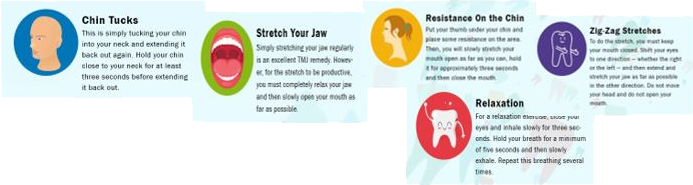
• Stretch the jaw and temple muscles: Place two to three fingers between your front teeth for a count to 20: rest and repeat 6 times. Gradually increase range of motion as tolerated.
• Watch Educational Videos on YouTube. Personally performed physical therapy treatment approaches by videos that shows you how to perform TMJ exercises for temporomandibular joint Dysfunction (TMD/TMJ) and minimize your pain.
• Get a good night’s sleep: Avoid caffeinated beverages (e.g) coffee, tea, and soft drinks. Improve sleep environment by reducing light and noise. Get a comfortable mattress and pillow. Reduce stimulating activities in late evening including computer work, video, and exercising. Do not sleep on your stomach.
• Use anti-inflammatory and pain-reducing medications: Short-term or intermittent use of over- the-counter ibuprofen, naproxen, acetaminophen, or aspirin (without caffeine) may reduce joint and muscle pain. Prolonged use daily may contribute to rebound pain and perpetuate the pain. Consider use of combination of analgesic and muscle relaxant in evening. Consult with your primary care provider when taking medications.
It is our goal to achieve maximum improvement with comfort and normal function, while using the least invasive and conservative treatment possible. For some patients, the ideal minimal intervention can be achieved, while for others, depending on the nature and stage of the condition, effective management and control is the maximum goal. When you experience TMJ disorder, grinding, related headaches, shoulder and neck pain, or simply wake up every morning with staggering pain in the jaw and neck area, understanding the exact cause of it is the first step to finding lasting relief, as well as improving your bite’s function and maintaining your oral health, smile and even your looks. . Rather than constantly repairing damage, at Dr. Raed M. Abutteen Dental Center, our aim and focus is on addressing the underlying cause of your presenting complaint and to help you function correctly and to your optimal potential.
If you are worried and would like to learn more about TMJ jaw joint disorders condition and its treatment or think you have some of the above described effects, schedule a consultation with one of our dentists to see how you can protect your teeth, mouth and overall well-being.
An oral and maxillofacial surgeon will often recommend TMJ arthrocentesis when conservative therapies for TMJ pain relief have not proven to be successful. This procedure is used to provide relief from temporomandibular joint pain and discomfort. The purpose of this procedure is to remove tissue breakdown products and reduce inflammation that may have accumulated in the affected joint by flushing it. Although pain relief is never guaranteed, many patients have found this procedure to be effective in managing their symptoms.
After receiving an anesthetic, the surgeon inserts a sterile needle into the temporomandibular joint space. A syringe is attached to the needle and used to push sterile fluid into the joint space. A second needle is then inserted so that the joint can be washed out. Fluid enters the joint through one needle and leaves out the other. This removes the inflamed fluid from the joint. Some surgeons will also use a steroid (anti-inflammatory medication) at the end of the procedure. It is injected and left in the joint prior to needle removals. Sometimes hyaluronic acid (HA) is injected into the place to facilitate the disc movement at the joint area and alleviate pain and discomfort.
• Open Joint Surgery: There are many types of open joint surgeries. Such surgeries may be needed in cases where the TMJ is degenerating, there are tumors in or around the TMJ, the joint is severely scarred or contains chips of bone and once the joint is fused together by bony growth (ankylosis) after the jaw has been subject to a trauma. The surgeon makes a cut in a skin crease just in front of the ear. This exposes the jaw joint. The surgeon may repair, reposition, or replace the disc with your own tissue or an artificial disc. Scar tissue or bony growths in the jaw joint can also be removed.
How Can You Personally Manage Your TMJ Pain
Simple self-care practices can often be effective in easing symptoms. Visiting a specialized dentist is however important to professionally mange your case based on identifying the cause of the problem and formulating a treatment plan customized to your special needs. Some of the self-care practices include;
• Apply moist heat or cold and massage tender muscle and joints: Heat or ice applications used up to four times per day while resting may relax muscles responsible for causing pain. For heat, microwave a wet towel for approximately 1 minute or until towel is warm and wrap around a hot-water bottle or heated gel pack. For cold, use ice wrapped in a thin cloth on the area until some numbness is felt. Use what feels best. Apply for 15 to 20 minutes, taking care not to burn or freeze skin. It is however advised to use cold packs at the phase of acute sharp pain and start using warm packs later on.
• Avoid foods that irritate your symptoms and chew on both sides: Avoid firm foods, such as french bread or bagels. Avoid chewy food such as steak or dry sticky candy. Cut fruits and vegetables into small pieces. Chewing on both sides will reduce strain. Do not chew gum.
• Avoid events or activities that trigger pain: Use a pain diary to review daily activities that aggravate the pain and modify your behavior accordingly.
• Avoid muscle testing habits and activities that strain the jaw and head muscles: Notice if you do any of these oral habits. Use reminders such as stickers or timers. If noticed, replace negative habits with positive habits such as the “n” tongue position. These activities include:- Conscious day time teeth clenching and grinding, teeth touching or resting teeth together, teeth tapping, biting cheeks, lips, and objects, hard and chewy foods, resting your jaw on your hand, pushing the tongue against the teeth, pushing the jaw forward or to the side, tensing the jaw, jaw strain from musical instruments or scuba diving tools and opening the mouth too wide with yawning or singing.
• Practice general relaxation, meditation and abdominal breathing: This helps reduce your reactions to stressful life events, decreases tension in the jaw and oral habits such as clenching.
• Maintain good jaw posture. Keep your tongue up, teeth apart, and jaw muscles relaxed: Closely monitor your jaw position during the day (waking hours) so that you maintain your jaw in a relaxed, comfortable position. This often involves placing your tongue lightly on the palate behind your upper front teeth (find this position by saying “n”), allowing the teeth to come apart while relaxing the jaw.
• Stretch the jaw and temple muscles: Place two to three fingers between your front teeth for a count to 20: rest and repeat 6 times. Gradually increase range of motion as tolerated.
• Watch Educational Videos on YouTube. Personally performed physical therapy treatment approaches by videos that shows you how to perform TMJ exercises for temporomandibular joint Dysfunction (TMD/TMJ) and minimize your pain.
• Get a good night’s sleep: Avoid caffeinated beverages (e.g) coffee, tea, and soft drinks. Improve sleep environment by reducing light and noise. Get a comfortable mattress and pillow. Reduce stimulating activities in late evening including computer work, video, and exercising. Do not sleep on your stomach.
• Use anti-inflammatory and pain-reducing medications: Short-term or intermittent use of over- the-counter ibuprofen, naproxen, acetaminophen, or aspirin (without caffeine) may reduce joint and muscle pain. Prolonged use daily may contribute to rebound pain and perpetuate the pain. Consider use of combination of analgesic and muscle relaxant in evening. Consult with your primary care provider when taking medications.
It is our goal to achieve maximum improvement with comfort and normal function, while using the least invasive and conservative treatment possible. For some patients, the ideal minimal intervention can be achieved, while for others, depending on the nature and stage of the condition, effective management and control is the maximum goal. When you experience TMJ disorder, grinding, related headaches, shoulder and neck pain, or simply wake up every morning with staggering pain in the jaw and neck area, understanding the exact cause of it is the first step to finding lasting relief, as well as improving your bite’s function and maintaining your oral health, smile and even your looks. . Rather than constantly repairing damage, at Dr. Raed M. Abutteen Dental Center, our aim and focus is on addressing the underlying cause of your presenting complaint and to help you function correctly and to your optimal potential.
If you are worried and would like to learn more about TMJ jaw joint disorders condition and its treatment or think you have some of the above described effects, schedule a consultation with one of our dentists to see how you can protect your teeth, mouth and overall well-being.