
What is it and When Should it be Considered
Prerequisites for successful implant therapy are integration of the implant, ideal implant position and appropriate hard and soft tissue contours. These require sufficient alveolar bone volume and favorable ridge contour coupled with an appropriate surgical technique. However, following extraction of a tooth/teeth the alveolar ridge resorbs and collapses, the rate of which may vary between sites and subjects. This may result in inadequate bone volume and unfavorable ridge architecture for dental implant placement and for aesthetically pleasing bridges.
 When you need to have your tooth removed, whether due to injury, decay or gum disease, it’s advisable to do so in a way that preserves the surrounding bone structure. When a tooth is extracted, bone degeneration begins to occur almost immediately. The remaining bone shrinks very quickly in the beginning. Then, it slowly continues to deteriorate as the months go by. The shrinkage is natural, but it does create difficulty in ideal implant positioning and fabricating beautiful bridges and even supporting a removable denture.
The shrinkage of the alveolar bone occurs in two ways. First, there is a horizontal shrinkage that takes place as a result of the collapse of the bone. This degeneration leaves the remaining ridge much narrower than it used to be.Second, there’s vertical shrinkage, which leaves the bone with less length. The process of shrinkage and degeneration occurs much more quickly if you use dentures.
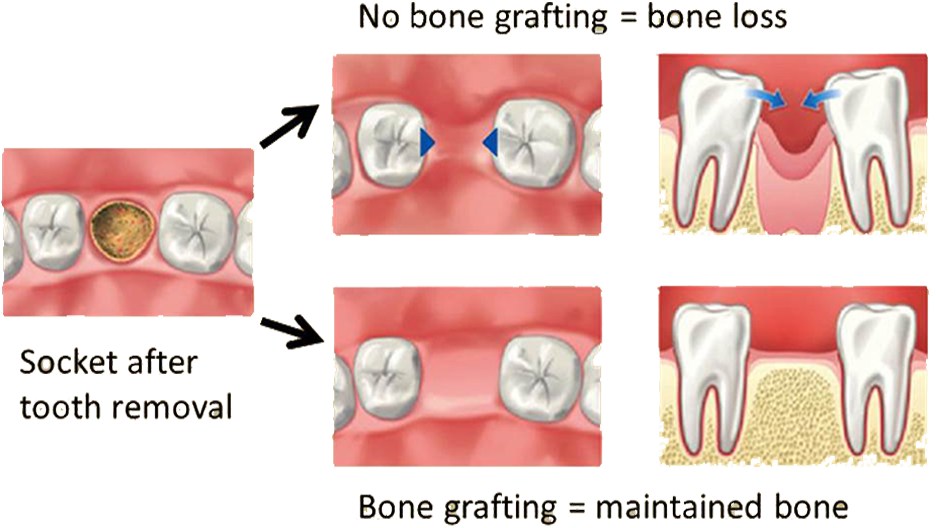 There are many options to prevent bone degeneration after tooth removal, and it’s essential to consider them before having any of your teeth removed. The best way to preserve the socket is to perform such procedures quickly once the tooth is gone.
Alveolar ridge preservation (ARP) is a method of decreasing bone resorption following tooth loss. After extraction, we add bone graft material to the socket where the tooth was removed to prevent it from collapsing and to minimize and prevent shrinkage. The process is quick and painless and helps prevent the need for bone grafting in the future.
There are many options to prevent bone degeneration after tooth removal, and it’s essential to consider them before having any of your teeth removed. The best way to preserve the socket is to perform such procedures quickly once the tooth is gone.
Alveolar ridge preservation (ARP) is a method of decreasing bone resorption following tooth loss. After extraction, we add bone graft material to the socket where the tooth was removed to prevent it from collapsing and to minimize and prevent shrinkage. The process is quick and painless and helps prevent the need for bone grafting in the future.
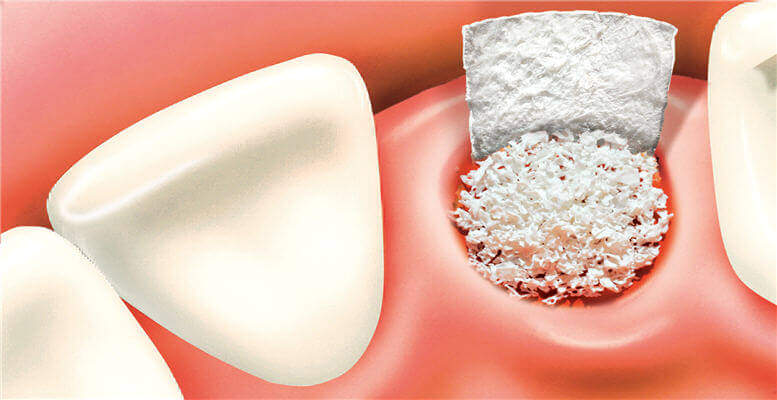 This means that after the tooth is extracted, your socket will be filled with bone graft and then concealed with a barrier to minimize the chance of collapse. The bone graft will support and preserve the tissue until it can be replaced with new naturally developed alveolar bone. Post-operative recovery after ridge augmentation or preservation is the same as regular tooth extraction without ridge preservation.

Extraction & Immediate Implantation
Immediate extraction and immediate implant is a revolutionary procedure which fits patients with a dental implant directly following tooth extraction within the same appointment. Traditionally patients waited couple of weeks/months for the extraction site to heal before receiving a dental implant. Qualified patients who can receive immediate extraction and immediate implant will enjoy tooth extraction and dental implant in one procedure, reduced recovery following surgery and less time at the dentist’s chair and office.
Read More
Prerequisites for successful implant therapy are integration of the implant, ideal implant position and appropriate hard and soft tissue contours. These require sufficient alveolar bone volume and favorable ridge contour coupled with an appropriate surgical technique. However, following extraction of a tooth/teeth the alveolar ridge resorbs and collapses, the rate of which may vary between sites and subjects. This may result in inadequate bone volume and unfavorable ridge architecture for dental implant placement and for aesthetically pleasing bridges.
When you need to have your tooth removed, whether due to injury, decay or gum disease, it’s advisable to do so in a way that preserves the surrounding bone structure. When a tooth is extracted, bone degeneration begins to occur almost immediately. The remaining bone shrinks very quickly in the beginning. Then, it slowly continues to deteriorate as the months go by. The shrinkage is natural, but it does create difficulty in ideal implant positioning and fabricating beautiful bridges and even supporting a removable denture.
The shrinkage of the alveolar bone occurs in two ways. First, there is a horizontal shrinkage that takes place as a result of the collapse of the bone. This degeneration leaves the remaining ridge much narrower than it used to be.Second, there’s vertical shrinkage, which leaves the bone with less length. The process of shrinkage and degeneration occurs much more quickly if you use dentures.
There are many options to prevent bone degeneration after tooth removal, and it’s essential to consider them before having any of your teeth removed. The best way to preserve the socket is to perform such procedures quickly once the tooth is gone.
Alveolar ridge preservation (ARP) is a method of decreasing bone resorption following tooth loss. After extraction, we add bone graft material to the socket where the tooth was removed to prevent it from collapsing and to minimize and prevent shrinkage. The process is quick and painless and helps prevent the need for bone grafting in the future.
This means that after the tooth is extracted, your socket will be filled with bone graft and then concealed with a barrier to minimize the chance of collapse. The bone graft will support and preserve the tissue until it can be replaced with new naturally developed alveolar bone. Post-operative recovery after ridge augmentation or preservation is the same as regular tooth extraction without ridge preservation.Although the bone graft placed into the socket of the tooth will preserve the bone and prevent the entire socket from collapsing, it will not last forever. Getting dental implants four to six months after ridge preservation is the best way to preserve your jawbone in the long term while restoring aesthetics and functionality.
Extraction & Immediate Implantation
Immediate extraction and immediate implant is a revolutionary procedure which fits patients with a dental implant directly following tooth extraction within the same appointment. Traditionally patients waited couple of weeks/months for the extraction site to heal before receiving a dental implant. Qualified patients who can receive immediate extraction and immediate implant will enjoy tooth extraction and dental implant in one procedure, reduced recovery following surgery and less time at the dentist’s chair and office.
Read More