
 Let’s face it - not all of us are regular brushers and flossers. We may think that it is not a big deal if we forget a couple of times to do so, right? Like many parts of our body, our teeth and gums need constant, consistent care in order to function their best. If you are not practicing good oral hygiene, it’s time to start. That is because without proper brushing and flossing, periodontal disease can set in, and cause real damage–not only to your gums, but to your overall health.
The easiest way to ensure gums are healthy is to prevent oral health problems by brushing and flossing properly each day and visiting our dental office at least twice a year. Our goal is always to help patients maintain their healthy smile, but if you do suffer from gum disease, we are here to help you stabilize your gum tissue and keep you educated on the latest treatment advancements.
What is Gum Disease?
 Gum disease is an infection of the tissues that provide support for the teeth. These tissues include the gums, ligaments and the jawbone. Bacteria that live in soft plaque generally cause gum disease. Plaque is a sticky film that occurs naturally after eating, and if it is not properly removed within 48 hours through brushing and flossing teeth, the plaque will harden into calculus, which is also known as tartar. Advanced gum disease, known as periodontal disease, mostly begins with bacteria-ridden plaque irritating the gum tissues. If this plaque is not removed with thorough brushing and flossing, it will turn into a hard substance called tartar (calculus). Once this calculus build up around teeth happens, you can no longer sufficiently clean your teeth on your own. A dentist or a dental hygienist must remove tartar with special sets of instruments.
 If tartar is allowed to build up around the gum line, it will break the healthy attachment between the gums and the teeth, allowing bacteria and plaque to collect under the gums and along the tooth roots. These openings at the gum line, are called pockets, and once they form, you run the risk of losing your teeth if you do not seek treatment from your dentist, dental hygienist or periodontist who is the gum and teeth supporting tissue specialist.
Stages of Gum Disease
 Gingivitis (gum inflammation) is the first stage of gum disease, and it is the only stage that is reversible after non-surgical management. It is characterized by red, puffy, bleeding gums, bad breath and a foul taste in the mouth.
If this condition is not addressed at the proper time the disease will progress going into the gum attachments to the tooth destroying it and creating pockets that will allow further development of the disease into the supporting bone into which the tooth is anchored. This, if not treated, will eventually lead to tooth/ teeth mobility and finally tooth/teeth loss.
Genetics can sometimes be responsible for advanced forms of gum disease. Some types of medications can also contribute to gum problems such as drug induced gingival enlargements.

While large cavities and dental nerve infections hurt, gum/periodontal disease is relatively painless which is why gum disease is the leading cause of tooth loss in adults. Many people do not know they have gum disease because they are not in pain, because of the very slow nature of disease development
Can Gum Health/Disease Affect Overall Health?
 The mouth is crucial to the overall health of your body. From the air you breathe to the foods you eat, numerous toxins enter your body via your mouth. The oral bacteria that run rampant in gum disease can also enter the body and affect your overall health. Oral bacteria can also enter the bloodstream through damaged gum tissues, and researchers have found traces of these bacteria in the brains of Alzheimer’s patients and in the arteries of heart disease patients. In Fact, many patients who had heart attacks and/or brain strokes, are patients with advanced gum diseases. Research has also shown a positive bidirectional relation between diabetes (elevated blood sugar level) and advanced gum disease. Not only does diabetes negatively affect the health of the gums, but also diseased gums elevate blood sugar levels. New-born -babies may suffer from low weight and/or pre term birth, if mothers have advanced gum disease. Because gum disease is a chronic condition, patients should do everything in their power to prevent it from developing and affecting their general health.
 Read More
Treatment of Gum Disease
 For patients suffering from mild gingivitis (the first initial phase of the disease), more frequent professional teeth cleanings in our dental office and improved personal homecare may be adequate to fully renew oral health. Such non-surgical treatment of gum disease reverses the effects of gingivitis at its early stages.
 Patients with more severe advanced stages of gum disease (periodontitis) may be in need of advanced therapies in addition to more frequent professional in-office teeth cleaning. These more advanced therapies include:
 • Scaling and root planing procedure, which consists of removing plaque and tartar (calculus) below the gum line. Also called a deep cleaning, this procedure involves removing the bacterial toxins on the surfaces of the tooth roots to help the gums reattach to the teeth and eliminate gum pockets
• Flap Surgery: Also called pocket reduction surgery, flap surgery involves pulling the gums away from the teeth and removing tartar and bacteria near the damaged bone. The bone tissues may be smoothed “known as reduction osseous surgery” to create an environment for healing and the gums are repositioned over the teeth and sutured in such a way that a pocket no longer exists.

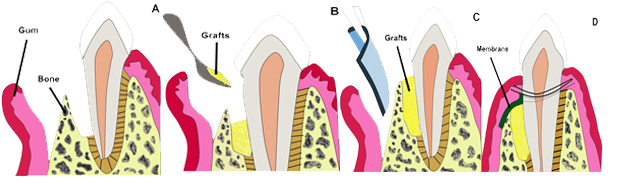
• Bone and Soft Tissue Grafts: In cases where the jawbone and gum tissues have deteriorated, grafted tissues are placed at the site of the damage to stimulate regrowth of bone and tissues. Known as “Guided Bone/Tissue Regeneration”, a tiny piece of mesh is placed between the damaged gum and root surface so that the gums will not grow into the void left by the bone deterioration. This allows both the gums and the bone tissues to regenerate normally for optimal support of the teeth.
If you are showing signs of gum disease, the best choice is to seek treatment immediately. We at Dr. Raed M. Abutteen Dental Center provide gum/periodontal treatment for every stage of gum disease and can help restore the health back to your gums and smile and maintain these results. Don’t let gum disease destroy your smile or your health!